Do Ghosts Know They're Dead?
March 28, 2014
Originally posted at AuthorKarenFrazier.com

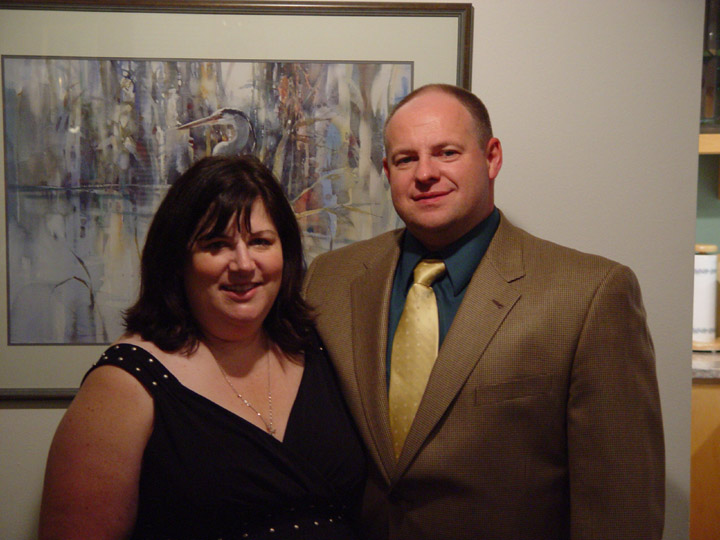
Chuck and Rachel Gotski
It's the way of live radio that things don't always go as planned. I've been co-hosting Paranormal Underground Radio with Rick Hale for years now, and occasionally all of our carefully laid plans go up in smoke minutes before the show is supposed to air. Heck, sometimes it happens when the show is already on the air - such as when a guest fails to answer their phone when we call them for their interview partway through the show.
When these situations arise, what listeners hear on the air is mild dismay along the lines of, "Oh shoot! I was really looking forward to talking to him/her."
What goes on behind the scenes, however, can only be described as all-out bedlam. While we sound calm on the air, we're usually in the midst of a full-blown panic about how we are going to entertain our listeners for the next few hours. Still, when these things happen, we know we just have to wing it, and so we do. Ironically, sometimes these panic-inducing shows turn out to be among my favorite we've ever done.
Such is the case of our show last night. Rick was off for the evening, and our guest canceled at the last minute. Fortunately the fabulous Chuck Gotski of In the Dark Radio filled in for Rick, and he brought his lovely daughter, Rachel, along as a guest (that's Chuck and Rachel, above). Rachel is 17 and gearing up for her first investigation with her dad's team. Chuck and I wound up picking her brain for over an hour, getting one teen's view of all of this paranormal stuff. It led to some pretty thought-provoking conversation that continued after Rachel said good-bye. As Chuck and I continued our on-the-air conversation, listeners in the chat room had plenty of questions for the two of us that led to in-depth discussion about paranormal and metaphysical topics.
One listener asked a question I actually get a lot, and it's this: Do ghosts know they are dead?
It's a good question. It's also one that's the subject of much debate in the paranormal field. I've formed my own opinion based on my years of experience communicating with ghosts, the metaphysical and spiritual understanding I have of the universe based on my education and studies, as well as activities in which I've engaged such as spirit communication and life-between-lives hypnotherapy.
I don't believe it is a question of whether ghosts know they are dead. I would imagine some do and some may be confused. In some cases, what we experience as "ghosts" are people who have already crossed over coming back to visit from the other side. These spirits definitely know they're dead, and they're just checking in on people or places they've loved. Other energies we experience as ghosts may not be dead at all. One theory suggests they could be spirits of people sleeping and traveling astrally in dreams. Others may be living people consciously engaged in astral travel. Other spirits we encounter might just be a recording of a life event - nothing more than a memory that plays itself over and over similar to a song on a DVD.
But what of those spirits who, for lack of a better definition, seem like they could be trapped here in this plane as ghosts, unable to cross over to the other side?
This is what I believe: These spirits aren't trapped. They can cross over whenever they wish because the doorway is always there, open to them. Instead, the issue many of these types of spirits have is that they continue to remain ego-identified with who they were in their last lifetime. It's not a matter of whether they know they are dead. It's that they don't remember who they truly are as a soul. Somehow, their identity has remained entangled with their past living self, and they've temporarily forgotten that who they really are is a piece of the Divine.
I believe when we come into each lifetime, we agree to forget who we are as souls. It's like going to a movie, agreeing to suspend disbelief, and immersing oneself into the world of the film for a few hours. In the case of souls, we do this for a lifetime. Some people may remember who they really are and identify with their soul state during their lives. Others remain engaged in the illusion of life until the point of their death, when suddenly they let go of their ego identities and merge with their Divine (soul) selves. Others struggle with letting go of the ego-identity a little more and may remain as "earthbound" spirits until such a time as something (or someone) helps them to recall their own Divinity.
Does that mean they don't know they're dead? It's hard to say. What it does mean is that, for the moment, they don't recall their own Divinity. Eventually they will, because we all do. For now, they don't.
There are many reasons a spirit may remain ego-identified after death, such as wanting to protect possessions, attachment to a place, trying to find lost loved ones, asking to have a story told, or fear that acts in life may lead to Hell in the hereafter. There are as many reasons for remaining ego-identified as their are souls in that state.
My goal is always to help them find a way to remember their Divinity so they can make the choice to go through the doorway and re-merge with the Source of all that is. Sometimes this takes a quick conversation. Sometimes it takes hours, days, weeks, months, or even years depending on the spirit and the situation. I never demand they go or tell them they have to cross over, because I believe it isn't my place to tell any other soul - living or dead - what he or she should do along the path. Instead, I communicate with them just as I would a living person in an attempt to help them resolve their issues so they can move on to the next stage of their evolution.
Chuck and Rachel Gotski
It's the way of live radio that things don't always go as planned. I've been co-hosting Paranormal Underground Radio with Rick Hale for years now, and occasionally all of our carefully laid plans go up in smoke minutes before the show is supposed to air. Heck, sometimes it happens when the show is already on the air - such as when a guest fails to answer their phone when we call them for their interview partway through the show.
When these situations arise, what listeners hear on the air is mild dismay along the lines of, "Oh shoot! I was really looking forward to talking to him/her."
What goes on behind the scenes, however, can only be described as all-out bedlam. While we sound calm on the air, we're usually in the midst of a full-blown panic about how we are going to entertain our listeners for the next few hours. Still, when these things happen, we know we just have to wing it, and so we do. Ironically, sometimes these panic-inducing shows turn out to be among my favorite we've ever done.
Such is the case of our show last night. Rick was off for the evening, and our guest canceled at the last minute. Fortunately the fabulous Chuck Gotski of In the Dark Radio filled in for Rick, and he brought his lovely daughter, Rachel, along as a guest (that's Chuck and Rachel, above). Rachel is 17 and gearing up for her first investigation with her dad's team. Chuck and I wound up picking her brain for over an hour, getting one teen's view of all of this paranormal stuff. It led to some pretty thought-provoking conversation that continued after Rachel said good-bye. As Chuck and I continued our on-the-air conversation, listeners in the chat room had plenty of questions for the two of us that led to in-depth discussion about paranormal and metaphysical topics.
One listener asked a question I actually get a lot, and it's this: Do ghosts know they are dead?
It's a good question. It's also one that's the subject of much debate in the paranormal field. I've formed my own opinion based on my years of experience communicating with ghosts, the metaphysical and spiritual understanding I have of the universe based on my education and studies, as well as activities in which I've engaged such as spirit communication and life-between-lives hypnotherapy.
I don't believe it is a question of whether ghosts know they are dead. I would imagine some do and some may be confused. In some cases, what we experience as "ghosts" are people who have already crossed over coming back to visit from the other side. These spirits definitely know they're dead, and they're just checking in on people or places they've loved. Other energies we experience as ghosts may not be dead at all. One theory suggests they could be spirits of people sleeping and traveling astrally in dreams. Others may be living people consciously engaged in astral travel. Other spirits we encounter might just be a recording of a life event - nothing more than a memory that plays itself over and over similar to a song on a DVD.
But what of those spirits who, for lack of a better definition, seem like they could be trapped here in this plane as ghosts, unable to cross over to the other side?
This is what I believe: These spirits aren't trapped. They can cross over whenever they wish because the doorway is always there, open to them. Instead, the issue many of these types of spirits have is that they continue to remain ego-identified with who they were in their last lifetime. It's not a matter of whether they know they are dead. It's that they don't remember who they truly are as a soul. Somehow, their identity has remained entangled with their past living self, and they've temporarily forgotten that who they really are is a piece of the Divine.
I believe when we come into each lifetime, we agree to forget who we are as souls. It's like going to a movie, agreeing to suspend disbelief, and immersing oneself into the world of the film for a few hours. In the case of souls, we do this for a lifetime. Some people may remember who they really are and identify with their soul state during their lives. Others remain engaged in the illusion of life until the point of their death, when suddenly they let go of their ego identities and merge with their Divine (soul) selves. Others struggle with letting go of the ego-identity a little more and may remain as "earthbound" spirits until such a time as something (or someone) helps them to recall their own Divinity.
Does that mean they don't know they're dead? It's hard to say. What it does mean is that, for the moment, they don't recall their own Divinity. Eventually they will, because we all do. For now, they don't.
There are many reasons a spirit may remain ego-identified after death, such as wanting to protect possessions, attachment to a place, trying to find lost loved ones, asking to have a story told, or fear that acts in life may lead to Hell in the hereafter. There are as many reasons for remaining ego-identified as their are souls in that state.
My goal is always to help them find a way to remember their Divinity so they can make the choice to go through the doorway and re-merge with the Source of all that is. Sometimes this takes a quick conversation. Sometimes it takes hours, days, weeks, months, or even years depending on the spirit and the situation. I never demand they go or tell them they have to cross over, because I believe it isn't my place to tell any other soul - living or dead - what he or she should do along the path. Instead, I communicate with them just as I would a living person in an attempt to help them resolve their issues so they can move on to the next stage of their evolution.
Posted by Karen Frazier. Posted In : Paranormal Theory